 Beebso
Open the app
Beebso
Open the app
Learn with Beebsie at Beebso.
Grammar and vocabulary can be taught by anyone with a good book. Pronunciation can only be taught by someone who has it — and most English teachers in the world learned English as adults, from teachers who also learned it as adults.
Beebso gives your child one clear American English model for every word, as many times as they want to hear it — and from Level 2 onward, tells them how close they got.
I taught English in classrooms in Vietnam for four years, and online to students in more than forty countries for seven. Over those years, adult students told me the same thing so often that it stopped sounding like a complaint and started sounding like a diagnosis:
"I had English lessons for years. My teacher helped me with grammar and vocabulary. But nobody ever taught me how to say the words, and my teacher's pronunciation was not clear either."
These were not badly taught students. They were taught the two things their teachers were able to teach. Pronunciation was the gap, and by the time they reached me as adults, the habits were twenty years old and painful to undo.
Children don't have that problem yet. A two-year-old can still hear distinctions an adult has stopped noticing. That window doesn't stay open forever, and it's the reason this app starts as early as it does rather than waiting for school.
Parents often ask whether English this early will confuse a child's mother tongue or slow it down. It doesn't. A two-year-old is already sorting out the sounds of their first language, and a second set of sounds arriving at the same time is learned alongside the first rather than on top of it. This is the one period in life when that's true — which is exactly why it's worth using.
Every word in the app follows the same three steps, and the third one is the part almost nothing else does.
A picture, and for most words an animation that makes it worth looking at. Children come back for this part. That's not decoration — a child who doesn't return doesn't practice.
A real recording of a native American English speaker saying the word clearly, the same way every time, available as many times as your child wants it. Not a synthetic voice, and not a voice that learned English as an adult.
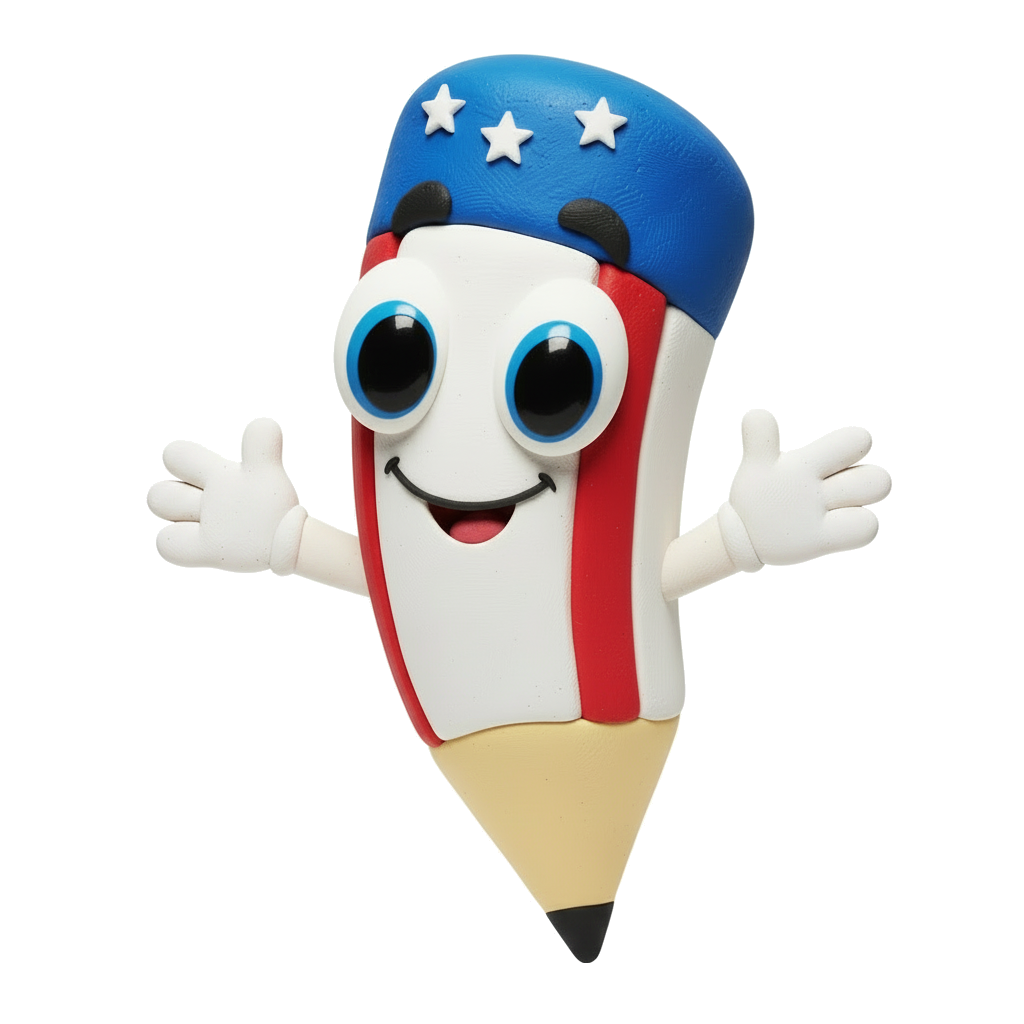
Your child speaks the word into the microphone and Beebsie — the pencil who guides them through every lesson — celebrates them for trying. This is the step your child cannot get from a book or a video: hearing a clear model and immediately using their own mouth to chase it.
Beebsie is a pencil. That isn't a random choice of animal — a pencil is the one object that spans the whole journey. At two your child scribbles with one. At seven they write with one. The character standing next to them is the tool they're growing into.
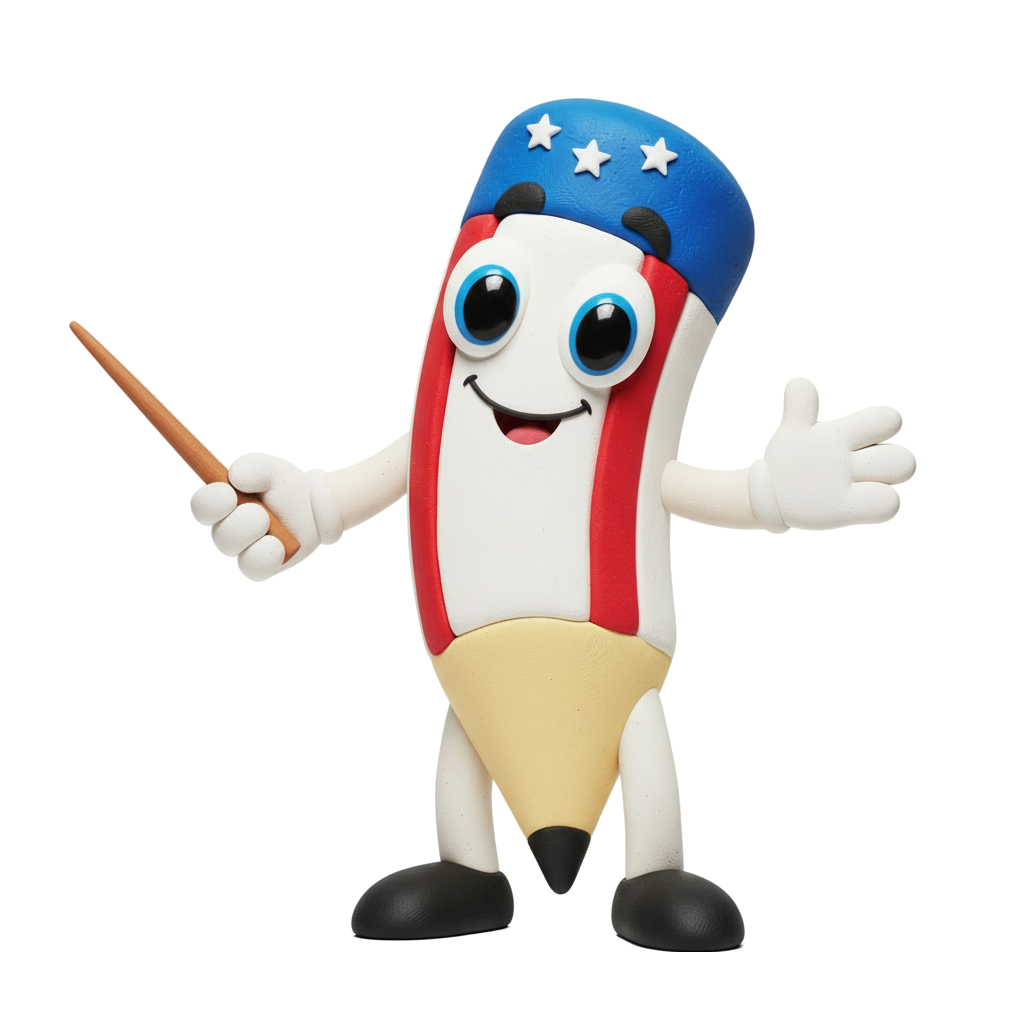
He never corrects your child. That's the important part. Beebsie's job is to be pleased that they tried, every single time, including the times it came out wrong. The scoring is a separate thing that arrives later and speaks in colors, not words. A child who thinks the friendly character might be disappointed in them stops speaking, and a child who stops speaking learns nothing.
He grows up when your child does. After the six-month break at five, your child comes back to the same friend, older — taller, with a pointer in his hand instead of a wave. This matters more than it sounds. Five-year-olds abandon things that feel babyish, and that's exactly the age most children quit a learning app. Beebsie having grown up too is the difference between returning to something you've outgrown and returning to someone who waited for you.
He isn't the reward. The Dinaurpions are what your child collects and keeps. Beebsie is the constant — there on the first letter at two and still there on the last sentence at seven. One friend for five years, and a shelf of characters that fills up along the way.
Your two-year-old will not say these words correctly. That is normal and it is planned for.
A two-year-old learning their own first language doesn't say words correctly either. They babble, they approximate, they drop half the syllables, and over months they get closer. Sounds like r, th and l aren't mastered by most children — including children born in America — until five, six or seven years old.
So Level 1 doesn't judge. Your child hears each word said clearly, says it back however it comes out, and is celebrated every time. What matters at this age is the ear and the attempt, not the accuracy — and an app that told a two-year-old they got it wrong would be wrong itself.
Scoring starts in Level 2, when the mouth has begun to catch up with the ear. From there the app listens to how your child says a word rather than only that they said it, and the standard rises with each level.
American English is built from about forty sounds. Not forty thousand words — forty sounds, and every word in the language is made from them.
The words and letters in Level 1 were chosen to cover every one of them. A child who has heard and attempted the a in apple, the th in three and the r in rice hundreds of times has those sounds in their ear before they ever need to produce them cleanly — in words they haven't met yet, in sentences they can't build yet, for the rest of their life.
That's why the early levels compound. Level 1 and Level 2 aren't the easy part to get through before the real work starts. They're where the sounds are learned. Everything after that is putting those same sounds into longer and longer pieces of language.
Each level takes about six months and builds directly on the one before it — the same way a child's own language develops, one layer at a time.
Twelve categories: the whole alphabet, numbers, colors, shapes, food, toys, family, transportation, weather and animals. One word at a time, heard clearly and said aloud. No scoring — this level builds the ear and the habit.
New categories of single words, and the microphone starts listening properly. Your child's attempt is scored sound by sound, gently at first and more strictly as the level goes on. This is where pronunciation starts being taught rather than only heard.
Adjectives attached to the words already learned. Red apple. Big dog. Cold rain. Every phrase brings back words from Levels 1 and 2, so the old sounds get practiced again at a higher standard while something new is added on top.
Full thoughts, joined with and. I eat the red apple and the yellow banana. The point at which a child is speaking rather than naming.
Longer stretches of natural English, with the rhythm and stress that make a speaker easy to follow.
A child who starts at two finishes all five levels at about four and a half — right before kindergarten. That's the point of the timing. Two and a half years of this builds toward one thing: a child who can sit in an American elementary school classroom and follow the teacher without struggling, because the sounds of the language are already familiar and they've been speaking it aloud since before they can remember.
What you're looking at now is the preschool program — ages two to about four and a half, five levels, from single sounds to full sentences.
Then a six-month break. That's on purpose. Your child has been at this for two and a half years, they're starting kindergarten, and there is plenty happening in their life without another thing to practice. Let it settle.
The second program picks up at five and runs to about seven and a half — another five levels, reading and writing alongside the speaking, for a child who already has the sounds. This is where the grown-up Beebsie above comes in, and where the pencil stops being a mascot and becomes the thing in your child's hand.
Five years of levels across the two, from two years old to seven and a half.
I'm telling you this because I think parents deserve to know where a thing is going before they start it, not after. But I'll be straight about the state of it: the second program does not exist yet. There's no date, no price, and nothing to sign up for. If it isn't ready when your child is, the preschool program still did its job on its own — everything above is complete and finished as it stands.
The entire alphabet is free, forever, with no account and no card. Not a demo — every letter, the real recordings, the characters, and the song at the end.
Try the free categories first. If your child comes back to them on their own, they'll use the rest. If they don't, you've lost nothing.
This takes about fifteen seconds and it changes how much your child uses it. Once the icon is on the home screen, they can open it themselves — no typing an address, no asking you for the phone first. It opens full screen, like any other app, with no browser bar in the way.
Chrome often shows an Install banner at the bottom of the screen on its own — tapping that does the same thing.
The first time your child speaks into it, the browser will ask permission to use the microphone. Tap Allow — without it, the app can play words but can't hear your child say them, which is the part that matters most. Nothing is ever recorded or stored. In Level 1 your child's voice doesn't leave the device at all.
Six months of one level. One payment.
The same price everywhere in the world.
Five levels at $29 is $145 spread across roughly two and a half years — around what a single hour with a private tutor costs in many countries, for a child who practices speaking every day instead of once a week.
Six months is a term, not a countdown. It's long enough to finish a level properly without rushing, and it means you're never paying for months your child isn't using.
My name is Anthony. I spent twenty-five years in finance, tax and technology before I started teaching English. I hold a TESOL certificate and a business degree, taught in Vietnamese classrooms for four years, and have taught online for seven years to students in over forty countries — including a year of private lessons with the CEO of a well-known technology company in Silicon Valley.
Every word in this app is recorded in my own voice. Not a text-to-speech engine, not a voice actor reading a list — the same model I'd give a student sitting in front of me.
No account. No card. Works in any browser.
Questions? hello@beebso.com
Learn with Beebsie at Beebso.
© 2026 Beebso